A safe room isn’t about fear. It’s about foresight.
In today’s security environment—where targeted intrusion, civil disruption, and operational uncertainty are all credible risks—forward-thinking organisations and homeowners are no longer asking “Will it happen?”
They’re asking “If it does, what’s our plan?”
A safe room (often referred to as a panic room) is a discreet, engineered space designed to provide temporary protection during a security incident—from forced entry to wider disruption—until the situation stabilises.
Done properly, it is not visible.
It is not dramatic.
And it is not a last resort.
It is a layered, intelligent part of a wider security strategy.
What does a modern safe room deliver?
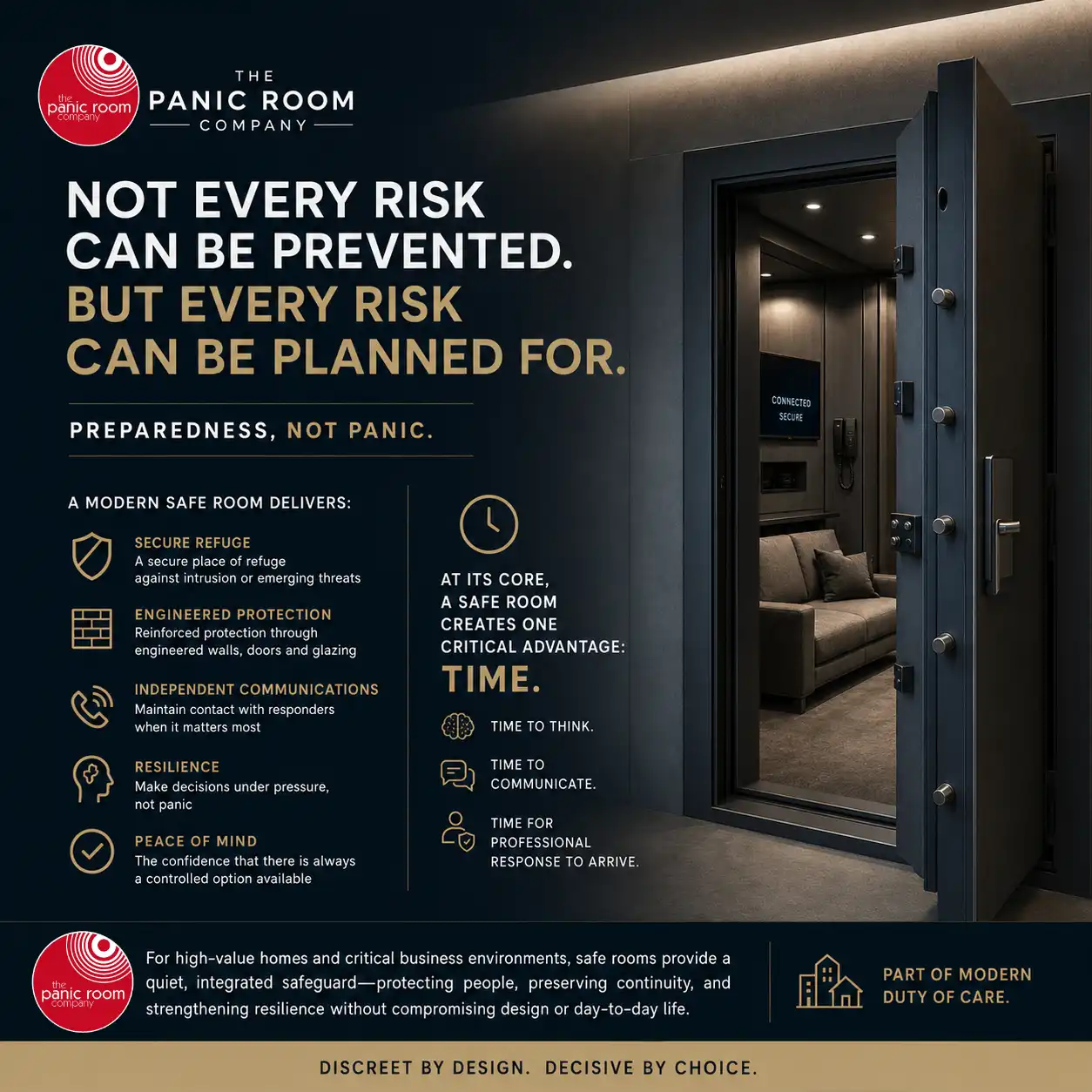
- A secure place of refuge against intrusion or emerging threats
• Reinforced protection through engineered walls, doors and glazing
• Independent communications to maintain contact with responders
• Resilience — allowing occupants to make decisions under pressure, not panic
• Peace of mind — the confidence that there is always a controlled option available
At its core, a safe room creates one critical advantage: time.
• Time to think.
• Time to communicate.
• Time for professional response to arrive.
For high-value homes and critical business environments, this is no longer an optional extra.
It is part of modern duty of care.
From executive residences to corporate headquarters, safe rooms provide a quiet, integrated safeguard—protecting people, preserving continuity, and strengthening resilience without compromising design or day-to-day life.
At The Panic Room Company, our philosophy is simple:
Preparedness, not panic.
If you’re assessing risk across your home or organisation, a safe room may be the most discreet—and most decisive—layer you can add.
#SecurityDesign #SafeRooms #RiskManagement #BusinessResilience #HighNetWorth #CorporateSecurity