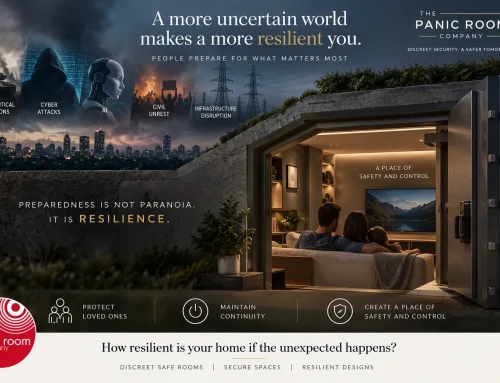
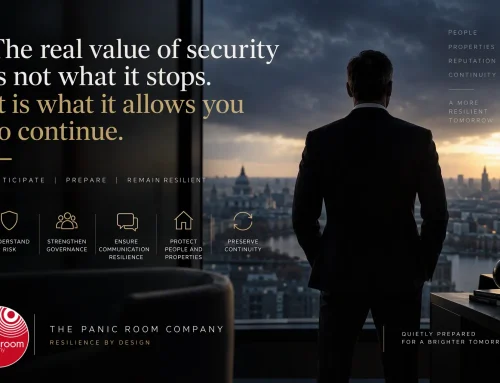
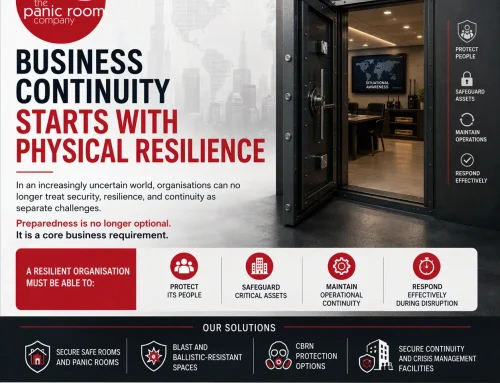
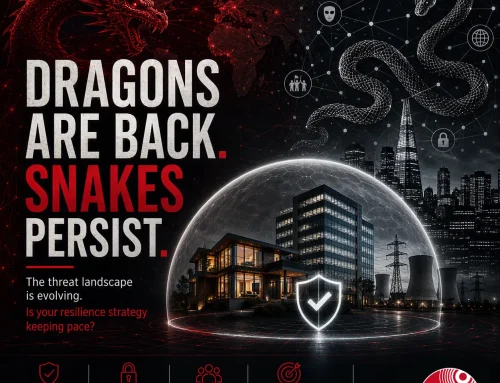
The most resilient homes are not necessarily the most heavily fortified. Recent world events have prompted many conversations about preparedness, resilience and the role of secure spaces within residential properties.
One question appears repeatedly:
“Do I need a panic room, a safe room or a nuclear bunker?”
The answer is often surprising. For the overwhelming majority of homeowners, families and estate owners, resilience has very little to do with preparing for apocalyptic scenarios.
Instead, it is about creating a protected environment where occupants can remain secure, communicate effectively and make informed decisions during unexpected disruption.
A panic room and a nuclear bunker are not the same thing:
▪️ A panic room is designed to provide immediate protection during a security incident.
▪️ A safe room often provides additional resilience features, including additional communications capability, independent services and extended occupancy.
▪️ A nuclear bunker is an entirely different category of infrastructure designed to protect occupants from severe external hazards over prolonged periods.
The mistake many people make is assuming that more protection is always better. In reality, resilience should be proportionate. A well-designed safe room integrated into a luxury residence may deliver significantly greater day-to-day value than a complex bunker system that is rarely used and difficult to incorporate into modern lifestyles.
The most successful projects begin with a simple question:
What are we trying to achieve?
For some clients, that means creating a secure refuge within a family home.
For others, it means integrating resilience into a new-build estate, a corporate headquarters, a private residence or a family office. The strongest solutions are rarely visible. They are discreetly integrated into the architecture, preserve lifestyle and privacy, and provide confidence without dominating the property.
Resilience is becoming an increasingly important design consideration for luxury homes. Not because people are becoming fearful. Because they are becoming more thoughtful about continuity, privacy and preparedness.
The future of residential resilience is not about building fortresses. It is about designing intelligent spaces that help protect the people who matter most.
To explore how resilience can be designed into homes, estates and workplaces, contact The Panic Room Company.
#SafeRoom #PanicRoom #NuclearBunker