Recent international headlines have once again sparked debate over how leaders assess warnings, interpret emerging risks and prepare for uncertain futures.
While the political circumstances attracting attention are unique, the underlying lesson is universal: resilience depends on what happens before a crisis, not during it.
For public figures, senior executives, family offices and affluent households, security is often viewed through the lens of physical protection. Yet the most effective protective strategies start much earlier.
They begin with understanding risk.
They continue through robust governance, clear decision-making processes, reliable communications and environments specifically designed to remain effective under pressure.
One of the recurring lessons from major incidents is that valuable information is only useful if organisations are ready to act on it. Threat intelligence, risk assessments and advisory reporting all have limited value unless they are supported by practical resilience measures and clearly defined responsibilities.
In the private sector this can apply to many situations:
- Protecting a principal facing elevated public attention
- Managing risks associated with high-value residential properties
- Supporting family office continuity planning
- Preparing for civil disruption or localised incidents
- Protecting executive teams during periods of heightened geopolitical uncertainty
- The conversation should therefore move beyond security as a reaction to threat.
The more useful question is: how resilient are your people, properties and decision-making structures when circumstances change unexpectedly?
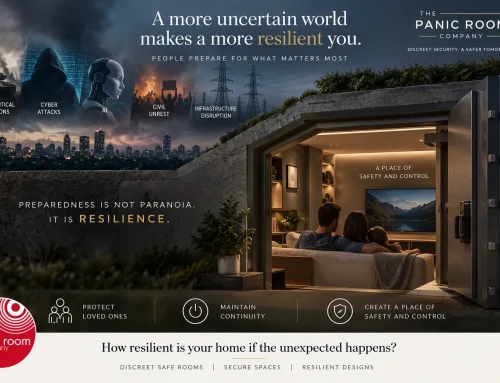
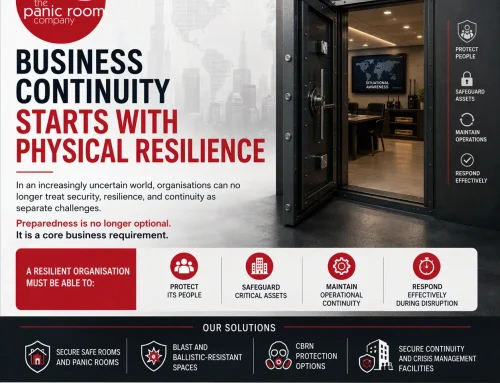
At The Panic Room Company, we increasingly see clients focusing on integrated resilience. Secure architecture, safe rooms, crisis planning, communications resilience and discreet protective measures are becoming part of a broader strategy designed to preserve continuity, privacy and confidence.
True resilience is rarely visible.
It is designed quietly into homes, estates and workplaces long before it is ever needed.
To explore how resilience can be designed into homes, estates and workplaces, reach out to start the conversation.