Stalking rarely remains confined to a single channel.
On 10 August, the Metropolitan Police reported that one of its detective constables had been sentenced following a stalking conviction. The reported conduct included harassment over social media, physically following the victim and sending a malicious message to a former partner. The court imposed a 12-month community order, 150 hours of unpaid work and a five-year restraining order.
The wider security lesson is important. Stalking should not be viewed solely as an online problem, a communications issue or a series of isolated unwanted encounters. Persistent behaviour can cross boundaries between digital platforms, workplaces, public locations and private residences. For public figures, senior executives, affluent families and family offices, resilience therefore requires a coordinated response.
That begins with recognising changes in behaviour and recording concerning incidents. It includes reviewing what personal information is publicly accessible, who knows the location of private residences and how household members, employees and advisers should respond to unexpected contact. It may also require coordination between legal advisers, corporate security teams, family offices, residential staff and specialist protection professionals. No single measure provides a complete solution.
The same principle applies to the design of the home.
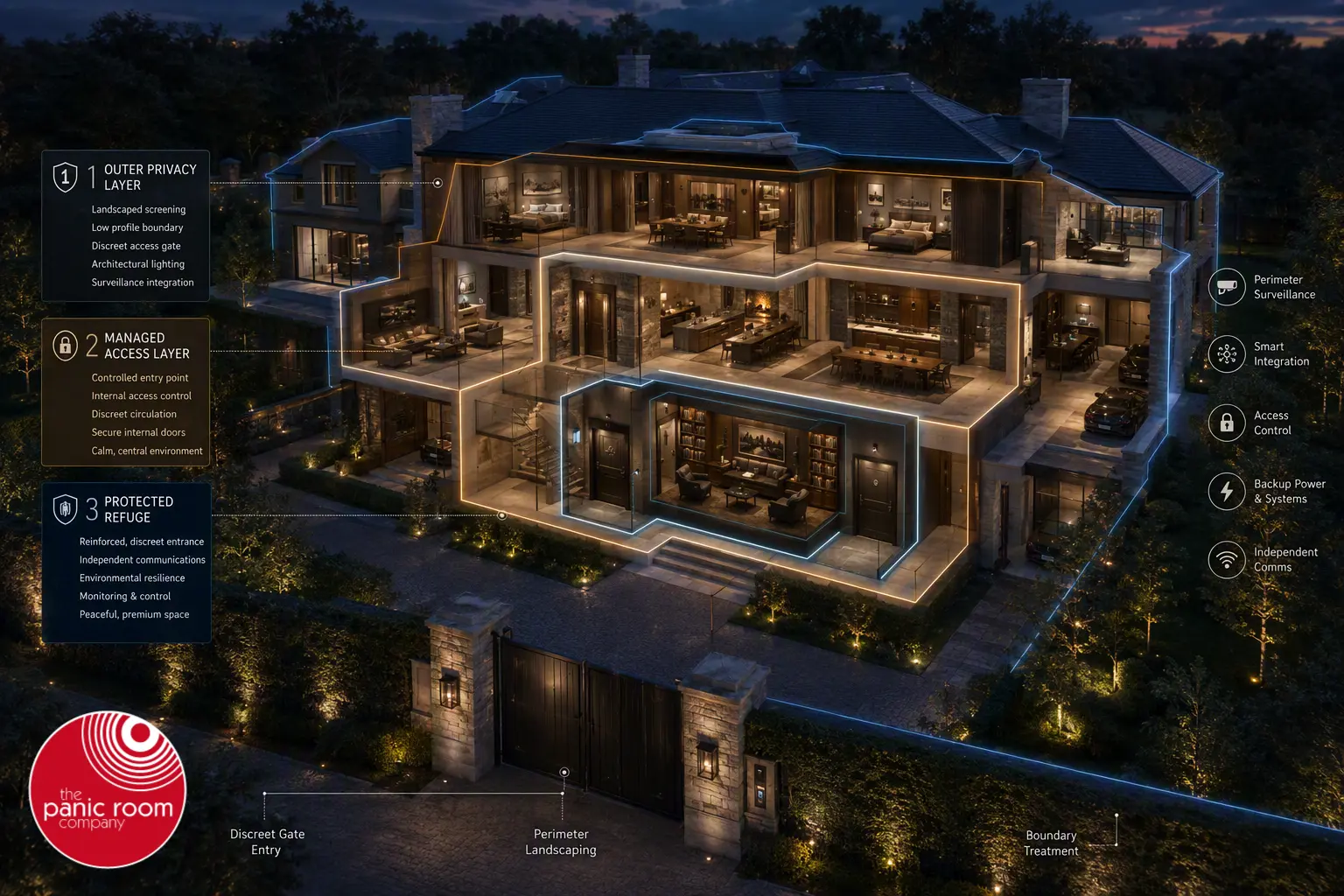
CCTV, access control, alarms and perimeter measures can contribute to residential protection. However, households should also understand what happens if preventative measures are bypassed or an individual gains access to the property. A professionally designed panic room or safe room can provide an additional layer of resilience. Its purpose is not to replace the police, professional threat assessment or sensible security procedures. It is to give occupants a protected place in which to secure themselves, communicate with the outside world and await assistance during a developing incident. In our view, the most effective residential protection is layered, discreet and based on the circumstances of the client.
The objective is not to transform a home into a fortress. Nor is it to suggest that every instance of unwanted contact will escalate. The objective is to identify credible changes in exposure, make informed decisions and ensure that people, property and procedures work together. For architects and developers, this means considering protected refuge capability early enough for it to be integrated sensitively into the building. For families and advisers, it means ensuring that residential resilience forms part of a wider personal-security plan rather than being treated as an isolated product purchase.
Preparedness creates options. Good design ensures those options remain discreet, practical and appropriate to the property.
To explore how resilience can be designed into homes, estates and workplaces, contact The Panic Room Company.
#ResidentialSecurity #SafeRoom #PersonalResilience